


Outbound to Benelux: Netherlands, belgium, luxembourg
Outbound to Benelux, pragmatic, multilingual and open
The short answer
Benelux is open to outreach and highly English-fluent, but the three markets differ. The Netherlands rewards blunt directness and substance; Belgium needs care over language (Dutch, French or English by region); Luxembourg is small and international. Be pragmatic, specific and clear, and mind the language line in Belgium.
On this page
- The Netherlands: blunt is good
- Belgium: mind the language line
- Luxembourg: small and international
- Pragmatic and open, everywhere
- What a Benelux campaign looks like in practice
- Data and GDPR across the three markets
- Common mistakes in Benelux outbound
- A checklist before you send to Benelux
- If you think Benelux is too small to bother with
- The pattern that works
Benelux is one of the more approachable corners of European outbound: internationally minded, English-comfortable and pragmatic. The trap is treating three distinct markets as one, especially where language is concerned.
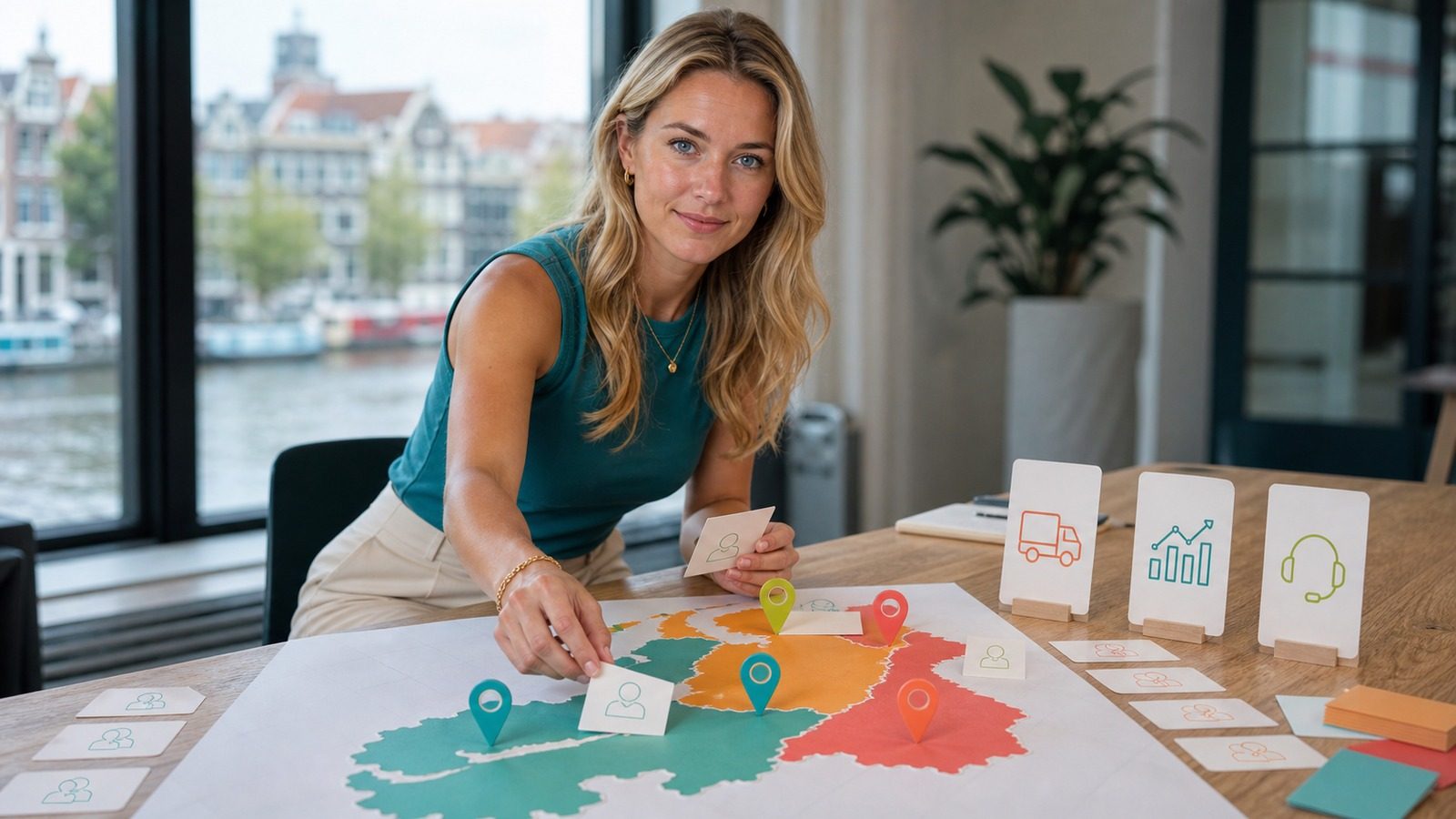
The Netherlands: blunt is good
Dutch business culture is famously direct, so bluntness is a feature, not a risk. A clear, honest, no-nonsense message that gets straight to the point suits the market and is respected, and the wider picture sits in our guide to lead generation in the Netherlands.
English is widely comfortable, so English outreach generally works. Hype and vagueness do not, as the Dutch will call them out plainly.
Belgium: mind the language line
Belgium is the subtle one. Language is regional and sensitive: Dutch (Flemish) in the north, French in the south, with Brussels bilingual and English common in international business. Getting the language wrong for a region can offend, so identify it and either use the right one or default to English carefully. See multilingual outbound.
Luxembourg: small and international
Luxembourg is a small, highly international, multilingual market with a large finance sector. English usually works, and the international mix means a clear, professional approach fits. Its size means the addressable list is finite, so precise targeting matters even more, much as it does in any small market.
Pragmatic and open, everywhere
Across Benelux, business culture leans pragmatic and internationally minded, so a specific, credible, well-targeted approach is welcome. These are markets open to good outreach, not closed to it.
The common thread is substance and clarity: say something relevant, clearly, and you will get a fair hearing across all three.
What a Benelux campaign looks like in practice
Take a software firm in Vilnius that wants meetings with operations directors at mid-sized logistics companies across the three countries. The list splits before a single email goes out: Dutch companies get English copy written bluntly, Flemish companies get Dutch or careful English, Walloon companies get French or careful English, and Luxembourg gets English.
That is four segments from three countries, which is the whole lesson. Language is a targeting field in Benelux, not a formatting decision taken at the end.
Volume works differently in each market too. The Netherlands has enough mid-market companies to sustain a standing campaign. Luxembourg's addressable list for most B2B offers runs to a few hundred accounts, so it behaves like an account-based programme rather than a volume one. Read account-based outreach before pointing a high-volume sequence at a market that small.
Data and GDPR across the three markets
All three countries sit under GDPR, with national supervisory authorities that take B2B email seriously without banning it. Business contact data for a named role at a named company, used for a relevant business proposition, with a clear sender identity and a working opt-out, is the normal footing for outbound here.
Company registers are workable. The Dutch KVK, the Belgian Crossroads Bank for Enterprises and the Luxembourg RCS all publish company-level records, which gives you firmographics and legal names but not personal contact data. The people layer comes from professional sources on top of that base. See where European B2B data comes from and GDPR-compliant cold email in Europe.
One local habit worth honouring: Dutch recipients are quick to unsubscribe and quick to complain about senders who ignore it. Process opt-outs the same day and keep the suppression list tight.
Common mistakes in Benelux outbound
- Filing Belgium under one language. Dutch copy sent to a company in Liege reads as carelessness. Fix: resolve the region from the registered address, then choose the language.
- Machine-translating into Dutch or French. A slightly wrong Dutch email performs worse than a good English one, because the reader can tell instantly. Fix: native copy or English, nothing in between.
- Padding the opening. Dutch readers cut through preamble fast, and three lines of throat-clearing before the point loses them. Fix: state the reason for writing in the first sentence.
- Overselling. Superlatives and unbacked claims invite a blunt reply, or none at all. Fix: make one specific claim you can defend, see writing the offer.
- Treating Luxembourg as a fourth Dutch province. The market leans heavily towards finance, funds and international services, with a workforce commuting in from three countries. Fix: build a separate, small, precise list.
A checklist before you send to Benelux
- Split the list by country first, then split Belgium by region.
- Assign a language per segment and either write native copy or default to English on purpose.
- Cut the opening to one sentence that names why this company, specifically.
- Check the offer survives a blunt question. Assume a Dutch reader replies asking what it costs and what proof exists.
- Set volume expectations by market. Netherlands: standing campaign. Belgium: segmented campaign. Luxembourg: named accounts.
- Confirm sender identity and opt-out before the first send, not after the first complaint.
If you think Benelux is too small to bother with
The three countries hold roughly 30 million people between them and a dense concentration of logistics, agrifood, finance and international headquarters. For a European seller already running DACH campaigns, Benelux is usually the cheapest adjacent expansion available: buying culture sits close to Northern European norms, and English carries most of the load.
The opposite objection is more dangerous. Because English fluency is high, teams assume Benelux is trivial and point an unchanged campaign at it. That is the version that fails. English removes the translation problem, not the targeting problem, and Belgium still splits three ways underneath it.
The pattern that works
Be direct and substantive for the Dutch, careful about language in Belgium, precise in small international Luxembourg, and pragmatic throughout. Benelux rewards clear, relevant, well-targeted outreach and only trips up senders who treat three markets, and Belgium's language line, as one.
Frequently asked
Can I do outbound to Benelux in English?
What is different about outbound to Belgium?
How direct should outreach to the Netherlands be?
Rather not build this yourself?
We run the targeting, data, copy and follow-up as a done-for-you service, and send the interested replies straight to your inbox. You bring the close.
Book a strategy call