


LinkedIn inMail vs. Connection requests: Which wins
InMail or connection request: which actually works
The short answer
For most B2B outbound the connection request with a short, relevant note beats a paid InMail, because a connection is warmer and free, and the follow-up messages cost nothing. Save InMail for people you cannot reach any other way, or where speed matters more than credits. The message quality decides the outcome far more than the channel.
On this page
InMail feels premium because you pay for it, and that is exactly why people overrate it. The channel is not the lever; the relevance of the message is, and a free connection request carries a better one further.
What each one is
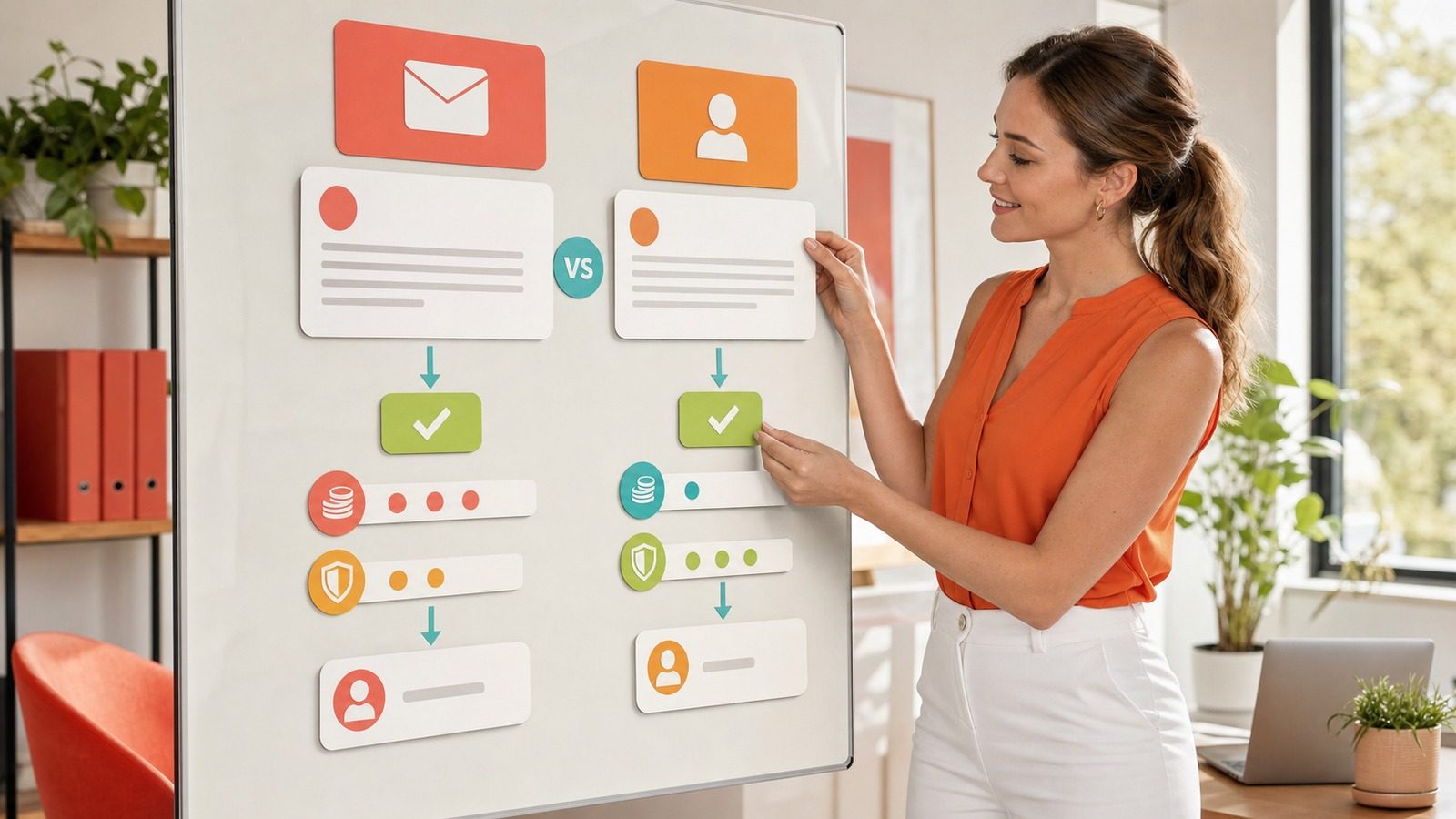
A connection request asks someone to add you to their network, optionally with a short note. Once accepted, you can message freely at no cost. It is the free, relationship-first path.
An InMail is a paid message you can send without connecting first. It reaches people outside your network directly, but you spend a credit per send and you are a stranger with no shared context.
Why the connection request usually wins
For most outbound, connecting first is the stronger play.
- It is warmer, an accepted connection is a small yes before you pitch.
- The follow-up is free, so a whole sequence costs nothing.
- It looks less like selling, which lowers the guard.
- It compounds, your network grows as a durable asset.
When InMail earns its cost
There are real cases for paying.
- They will not accept requests, some senior people simply do not.
- Speed matters, when waiting for an accept is too slow for a live opportunity.
- Very high-value targets, where a credit is trivial against the deal.
The message matters more than the channel
Whichever you choose, the note decides the outcome. A generic connection request is ignored; a generic InMail is ignored and paid for. A specific, relevant, short message earns a reply on either channel.
So the acceptance rate on your connection requests is the number to work on first. Fix that and the free path outperforms the paid one for most campaigns.
The numbers to expect
Published benchmarks move with market and seniority, so the number worth planning against is your own. In the campaigns we run, a well-written request to a relevant prospect is accepted by a substantial minority of the people it reaches, and a generic request with no note, or one that pitches, sits far below that. Once connected, a short and genuinely relevant first message draws replies at a rate well above what the same message would earn as cold email, though still from a minority of contacts. Record both rates from your first hundred requests and use those as the baseline.
InMail response rates are harder to generalise because senders use them on colder, more senior targets. The honest picture: a strong InMail to a well-chosen prospect can outperform email to the same person, but a mediocre InMail performs no better than a mediocre email and costs credits doing it. In both channels, targeting quality moves the numbers more than format. If your acceptance rate is poor and stays poor, the problem is almost always the list or the note, not the channel.
A worked example: same prospect, two paths
Say the target is a logistics director at a mid-sized German freight company. The InMail path: one paid message lands in their inbox flagged as an InMail, which most senior people recognise as sales mail. It gets one shot, and if ignored, the credit is gone and there is no second touch without spending another.
The connection path: a request with a one-line note referencing their fleet expansion. If accepted, a thank-you message with no pitch, then a short relevant question two days later, then a useful observation the week after. Three free touches, each one warmer than the last, and the prospect now sees your posts in their feed between messages. The second path takes ten days longer and wins more often. Finding the right person to run it against is its own skill, covered in finding decision makers on LinkedIn.
Common mistakes on both channels
- Pitching in the connection request. The note is for context, not selling. Fix: one line about why them, nothing about you.
- The pitch-slap. A sales message seconds after the accept undoes the small yes you just earned. Fix: wait a day or two, and open with something other than an offer.
- Sending InMail as a fallback for lazy targeting. Credits do not fix a bad list. Fix: qualify with Sales Navigator filters first, then choose the channel.
- Automating beyond the platform's tolerance. High-volume automated requests risk restrictions on the account doing the sending. The limits and safe practices are covered in where the automation line is.
- Measuring sends instead of conversations. Fifty accepts with no replies is a vanity number. Fix: track conversations started per week, not connections added.
A quick decision checklist
- Is the prospect active on LinkedIn? If their profile is dormant, neither format works well; lead with email instead.
- Do you share context? Mutual connections, groups or an event make a connection request natural. Use it.
- Is the opportunity time-boxed? A live tender or an expiring trigger justifies InMail's speed.
- Is this a top-ten account? For the highest-value targets, use both: connect, and if no accept within a week, send the InMail.
- Everything else: connection request with a specific note, then a patient sequence.
Use LinkedIn as one channel, not the whole plan
Neither InMail nor connection requests are a strategy on their own. LinkedIn works best woven with email in a multichannel sequence, where a connection warms the ground for an email and vice versa, and where LinkedIn ads can keep the same accounts warm in the background. The channel choice inside LinkedIn is a detail; the coordination across channels is the lever.
Frequently asked
Is LinkedIn InMail better than a connection request?
When should I use InMail instead of connecting?
What decides whether LinkedIn outreach gets a reply?
Rather not build this yourself?
We run the targeting, data, copy and follow-up as a done-for-you service, and send the interested replies straight to your inbox. You bring the close.
Book a strategy call