


Running a B2B product demo that actually sells
The demo that sells, because it shows one thing well
The short answer
A good demo is not a tour, it is a targeted proof that your product solves this prospect's specific problem. Discover first, show only what matters to them, lead with the outcome, and confirm a concrete next step. The feature-complete demo impresses nobody and loses the deal in the noise.
On this page
- Discover before you demo
- Show one thing, well
- Lead with the outcome, not the interface
- Make it a conversation, not a monologue
- Handle the price and the doubts in the open
- A shape for the thirty-minute demo
- Demoing to a buying committee
- Common demo mistakes, and the fixes
- Close on a concrete next step
- After the call: the demo is half the sale
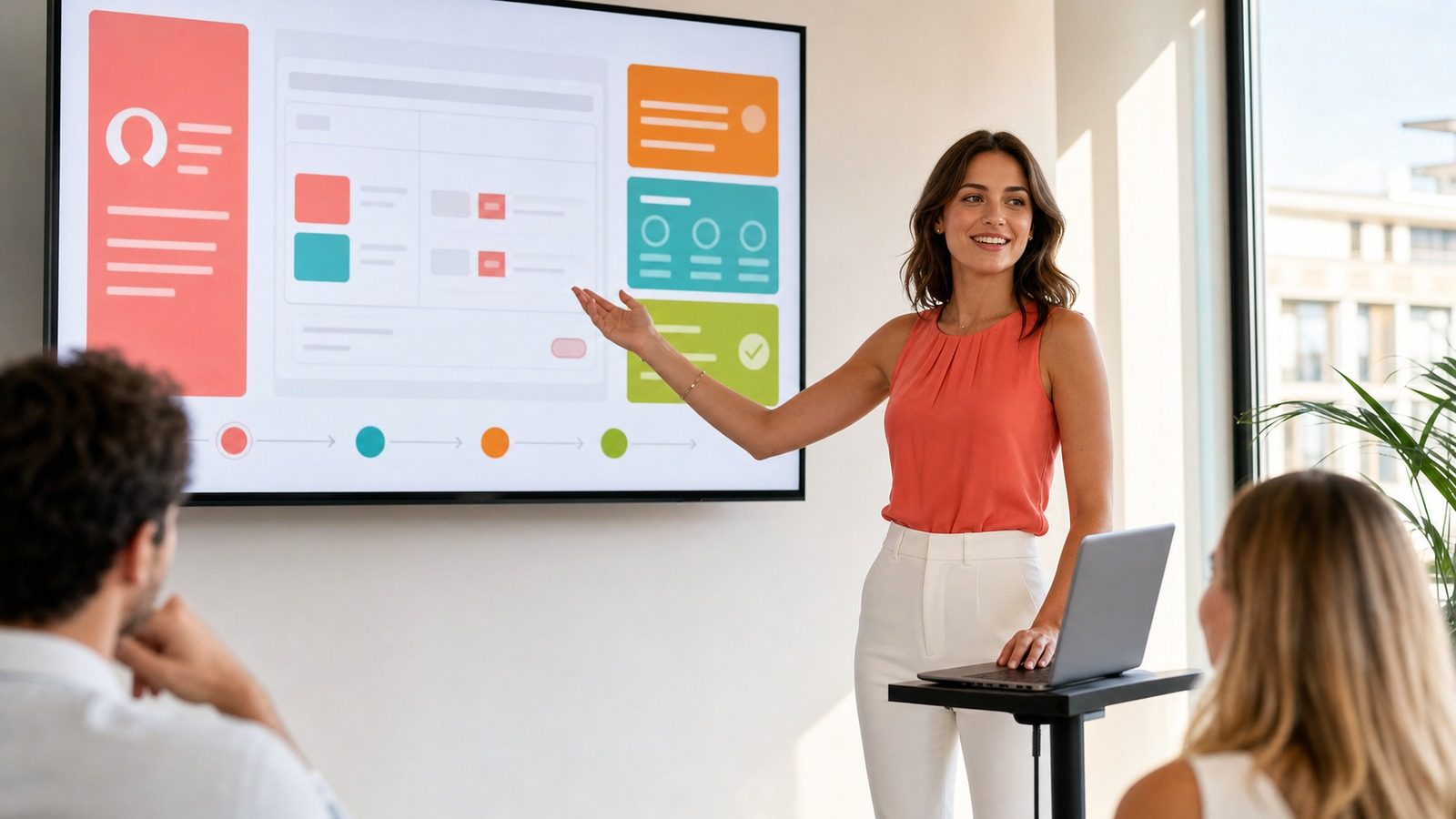
The most common way to lose a deal at the demo is to show everything the product does. The prospect came to see one thing solved, and you buried it under forty features they never asked about.
Discover before you demo
A demo without discovery is a guess. If you do not know which problem the prospect actually has, you cannot show the part that matters, so you show all of it and hope.
Even a short discovery step, a few questions before or at the start of the call, tells you what to demonstrate and what to skip. The demo then answers a question they actually asked.
Show one thing, well
The feature tour is the enemy. A prospect remembers a single clear outcome; they forget a parade of capabilities. Demo the one workflow that solves their stated problem, make it land, and stop.
Lead with the outcome, not the interface
Start from the result the prospect wants, then show how the product gets there, not the other way around. Here is the report your board asks for, produced in a minute lands; let me walk through our settings menu does not.
Frame every click in terms of what it does for them. The interface is a means; the outcome is the sale.
Make it a conversation, not a monologue
A demo where you talk for thirty minutes uninterrupted is a presentation, not a sale. Pause, check that what you are showing matters, and let the prospect steer toward what they care about. The best demos feel like the prospect is being helped, not pitched at.
Handle the price and the doubts in the open
Do not save objections for the end. If cost or a missing capability is on their mind, surface it and address it during the demo, calmly, the way you would a cold-call objection. Unspoken doubts do not disappear; they just kill the deal after you hang up. The habits from handling objections apply here too.
A shape for the thirty-minute demo
Most B2B demos get thirty to forty-five minutes on the calendar. Spend them deliberately rather than evenly:
- Minutes 0-5: confirm the problem. Restate what you learned in discovery and check it still holds. "Last time you said reporting takes your team two days a month. Still the case?" If the answer surprises you, adjust the demo now, not at minute twenty.
- Minutes 5-20: the core workflow. One problem, one workflow, shown end to end with data that resembles theirs. Narrate outcomes, not buttons.
- Minutes 20-25: their questions. Leave real room. The questions tell you which objections are live and which stakeholders are missing.
- Minutes 25-30: next step. Name it, date it, agree it before anyone leaves the call.
Send a short agenda before the meeting so the prospect knows this is their session, not a broadcast. It also cuts no-shows, which are a quieter deal-killer than any bad demo.
Demoing to a buying committee
Past a certain deal size you are rarely demoing to one person. An operations lead cares about the workflow, a finance stakeholder cares about cost and risk, and IT cares about security and integration. Showing all three the same fifteen minutes wastes two of them.
Ask who will attend before the call, and address each attendee's question somewhere in the session, even briefly. If a decision-maker is absent, resist the urge to run the full demo anyway; a shorter session plus a second demo for the right audience beats a great show for the wrong room. Mapping who owns which concern is covered in mapping the buying committee.
Common demo mistakes, and the fixes
- The full tour. Forty features in forty minutes leaves no memory of any of them. Fix: one workflow, shown well, with time to breathe.
- Demo data that looks fake. "Test Company 123" breaks the illusion that this could be their business. Fix: five minutes preparing an environment with their industry, currency and role names.
- Winging the setup. Loading screens, expired logins and "it usually works" cost credibility by the second. Fix: a dry run the same day, on the same connection.
- Answering every question live. Bluffing on a technical or pricing question you cannot answer damages trust. Fix: "Good question, I will confirm and send it in writing today", then do it.
- Ending without an ask. "Any questions? OK, we will be in touch" hands control of the timeline to nobody. Fix: propose the next step yourself, with a date.
Close on a concrete next step
End the demo the way you end a discovery call: with a specific, agreed next action and a date. A demo that finishes on we will send you some information leaks the momentum you just built. If there is fit, name what happens next and when.
After the call: the demo is half the sale
What happens in the 24 hours after the demo often decides the deal. A short written recap, the problem in their words, what you showed, the agreed next step, keeps the outcome alive for the stakeholders who were not in the room. The mechanics are in the post-meeting follow-up.
For deals with several approval steps, turn the recap into a lightweight mutual action plan: the remaining steps, owners and dates on one page. Prospects who engage with it tend to close; prospects who ignore it are telling you something too. Either signal beats silence, and both shorten the distance between a good demo and a signed deal.
Frequently asked
How do I run a B2B demo that closes?
Why do product demos fail to convert?
Should I demo the whole product?
Rather not build this yourself?
We run the targeting, data, copy and follow-up as a done-for-you service, and send the interested replies straight to your inbox. You bring the close.
Book a strategy call